


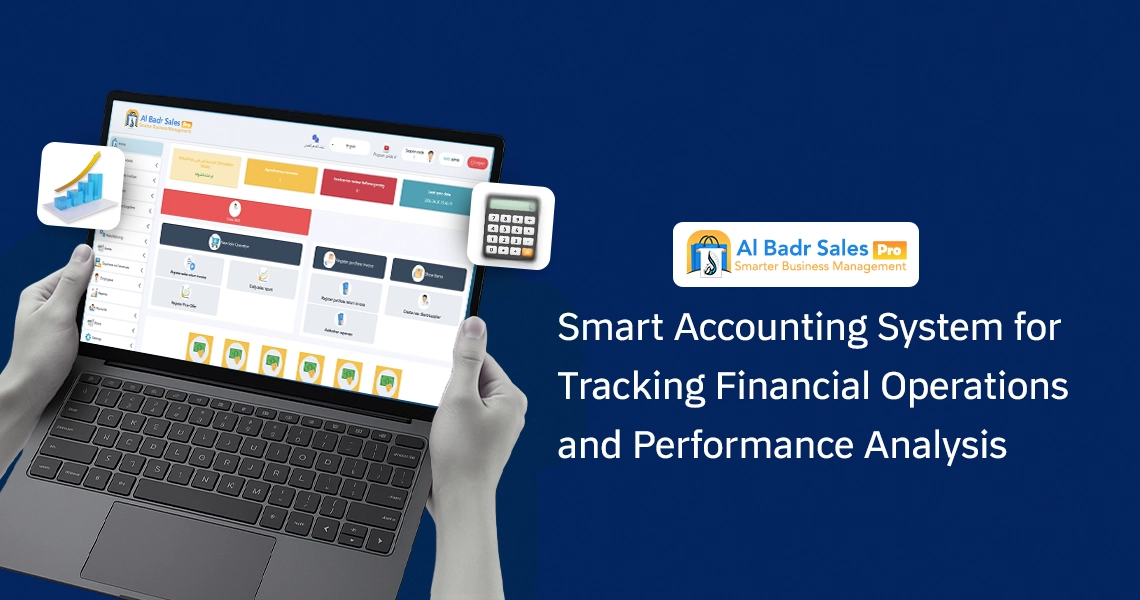
Do you ever feel like your business numbers pile up like mountains of paperwork without telling the full story? Managing operational data manually leads to costly human calculation errors that distort revenue projections. Adopting a Smart Accounting System mitigates these risks by delivering precise real-time reporting for informed decision-making.
What Is a Smart Accounting System?
A Smart Accounting System represents the next generation of financial management software, moving far beyond basic ledger entry. It functions as an integrated Smart Accounting System platform that leverages automation and intelligent data processing to streamline, consolidate, and reconcile corporate transactions automatically.
This advanced managerial solution provides automated journal entry creation, converts raw ledger entries into visual KPI dashboards, and links inventory with point-of-sale activities. Implementing a Smart Accounting System eliminates manual data entry bottlenecks across departments.
Components of a Modern Smart Accounting System
Modern financial solutions rely on several core operational modules working in sync:
- General Ledger Module: Handles journal entries, trial balances, balance sheets, and income statements.
- Sales and Purchasing Unit: Tracks receivables, payables, vendor relations, and automated invoicing.
- Inventory and Fixed Asset Management: Tracks stock values, item unit costs, and automated asset depreciation schedules.
- Performance and Reporting Engine: Serves as the central core for performance analytics and budget forecasting.
Tracking Daily Financial Operations
Tracking daily business activities forms the baseline of effective corporate accounting. A Smart Accounting System simplifies transaction logging, reducing the labor required for manual ledger updates. Every sales invoice or purchase order automatically generates accurate double-entry journal logs.
Using a Smart Accounting System ensures complete visibility over daily cash flows and outstanding receivables. Real-time ledger updates give leadership immediate insight into pending customer payments and upcoming vendor obligations.
Deploying a Smart Accounting System provides strong internal control mechanisms through clear digital audit trails. Every transaction links back to its original source document, deterring fraud and improving data security.
Real-Time Cash Flow Management
Monitoring incoming liquidity and outgoing expenses prevents unexpected cash crunches and ensures stable working capital.
Automated Journal Entries
Transactions occurring at checkout or purchasing automatically reflect across general ledgers without manual intervention.
Audit Trails and Data Protection
Clear digital logs make every ledger modification fully traceable, securing corporate accounts against internal tampering.
Financial Performance Analysis for Enterprises
Recording raw numbers is only the first step; analyzing financial health extracts true business value. A Smart Accounting System serves as the analytical engine that enables executives to evaluate overall organizational vitality:
- Measures profitability using net margin, gross margin, and return on investment (ROI) metrics.
- Conducts horizontal and vertical comparative analyses against past fiscal quarters.
- Evaluates administrative overhead as a percentage of gross operational revenue.
- Supports accurate future budgeting using audited historical performance data.
- Highlights underperforming branches, sales reps, or product SKUs.
- Pinpoints operational waste across supply chain and inventory workflows.
- Delivers visual executive dashboards for immediate performance evaluations.
- Tracks capital expenditure efficiency and fixed asset depreciation.
- Replaces subjective guesswork with validated transactional data.
- Prepares the business for sustainable, data-backed commercial expansion.
An enterprise-grade Smart Accounting System simplifies multi-branch financial comparisons. Utilizing a Smart Accounting System empowers decision-makers with precise operational intelligence.
Effortless Accounting Report Generation
Compiling end-of-month statements no longer requires weeks of manual compiling. A Smart Accounting System generates balance sheets, cash flow reports, and income statements within seconds, offering real-time visibility across all operations.
Customizable reporting filters allow financial managers to evaluate performance by specific branch, sales representative, or customer category. Presenting financial metrics through clear graphical charts ensures non-technical stakeholders easily digest key performance indicators.
The Smart Accounting Reporting Engine offers real-time profit and loss tracking, automated cash flow statements, customizable branch audits, and visual KPI performance graphs.
Integrating a Smart Accounting System accelerates month-end closing workflows. Relying on a Smart Accounting System guarantees accurate financial disclosures during external audits.
Integration with Sales and Inventory Systems
A reliable Smart Accounting System must operate within an enterprise resource planning (ERP) framework, connecting seamlessly with front-line sales and warehouse inventory:
- Instant POS Synchronization: Checkout sales instantly update ledger receivables and deduct warehouse stock.
- Fixed Asset Tracking: Calculates fixed asset depreciation automatically, keeping balance sheets up to date.
- Procurement Reconciliation: Matches purchase orders against vendor invoices and payment receipts automatically.
Connecting a Smart Accounting System to warehouse modules prevents inventory stockouts. Linking a Smart Accounting System to sales terminals ensures instant revenue recording.
Supporting Digital Transformation in Saudi Arabia
Adapting to digital transformation mandates is critical for companies operating in the region, particularly regarding tax regulations and e-invoicing. A Smart Accounting System provides the technical infrastructure needed for full regulatory compliance.
Modern software automates Value Added Tax (VAT) calculations and issues compliant electronic invoices matching ZATCA phase one and phase two requirements. Cloud-based availability grants leadership secure remote access to business accounts from anywhere.
Adopting a compliant Smart Accounting System ensures seamless ZATCA e-invoicing integration. Deploying a cloud Smart Accounting System supports secure remote operational management.
Financial Data Protection and Security
Corporate ledgers contain sensitive business intelligence that requires robust cybersecurity measures. A Smart Accounting System incorporates multi-layered security protocols to safeguard critical records:
- Employs end-to-end data encryption and automated offsite backups to prevent data loss.
- Configures strict user permission controls so staff access only role-relevant data.
- Logs every user edit with timestamps to maintain rigorous internal accountability.
A secure Smart Accounting System shields sensitive corporate assets from unauthorized digital access. Implementing a Smart Accounting System guarantees encrypted data storage.
Managing Cash Flow, Expenses, and Revenue Streams
Maintaining steady cash flow is essential for long-term operational survival. Business owners must look beyond gross revenue and track operational costs continuously.
A Smart Accounting System records revenue streams alongside recurring overhead like rent, utilities, and employee salaries. This complete financial picture simplifies expense management and helps leadership anticipate future financial commitments.
Connecting cash flow tracking with inventory dynamics shows how stock purchasing impacts available liquidity. Regular income vs. expense reviews highlight periods of high expenditure, allowing for proactive cost-cutting measures.
A proactive Smart Accounting System keeps operating margins healthy. Monitoring daily liquidity with a Smart Accounting System protects overall solvency.
The Role of Smart Systems in Strategic Decision-Making
Effective executive leadership relies on data accuracy, not guesswork. A Smart Accounting System organizes high-volume transactional data into actionable executive insights.
Financial reports reveal top-margin items, track customer payment histories, and highlight declining product lines. Armed with these insights, management can adjust pricing strategies, optimize purchasing schedules, and reallocate capital efficiently.
Leveraging a Smart Accounting System replaces guesswork with data-driven strategy. Integrating a Smart Accounting System helps managers identify new market expansion opportunities.
How to choose the right smart accounting system for your business?
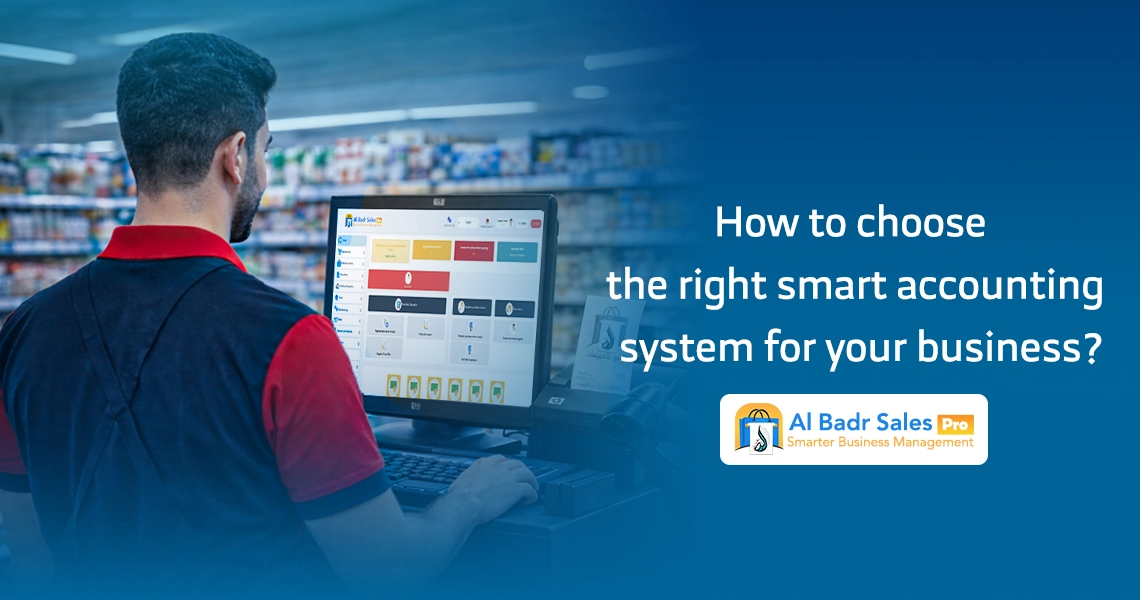
Selecting appropriate accounting software requires evaluating core operational criteria beyond basic software pricing:
- Confirm the platform scales smoothly with user growth and branch expansions.
- Ensure complete compliance with local regulatory requirements, including ZATCA e-invoicing.
- Test interface usability so operational staff learn daily workflows quickly.
- Verify the provider offers responsive local technical support.
- Ensure the software delivers real-time, customizable financial reporting.
- Look for workflow automation capabilities to reduce manual administrative labor.
- Confirm robust inventory and cash flow management integrations.
- Check compatibility with existing POS, CRM, and HR management software.
- Require enterprise-grade security protocols, encryption, and automated backups.
- Select a modular solution that adapts as business needs evolve.
Selecting a tailored Smart Accounting System maximizes operational efficiency. Investing in a Smart Accounting System delivers long-term administrative cost savings.
FAQ About Smart Accounting Systems
What is the main benefit of automated journal entries?
Automated journal entries eliminate manual data entry errors, standardize accounting workflows, and ensure financial statements remain completely accurate.
How does fixed asset management software help my business?
It automates asset valuation, tracks physical equipment locations, and calculates depreciation schedules automatically, ensuring balance sheets reflect true asset values.
Can small business accounting software support performance analytics?
Yes, a modern Smart Accounting System built for small businesses offers intuitive visual dashboards that track cash flow, net profit margins, and monthly expenses without requiring complex technical accounting knowledge.
The Best Smart Accounting Solution – Al-Badr Sales Program
Modern competitive markets demand financial tools that combine intelligence, speed, and accuracy. Al-Badr Sales Program stands out as an enterprise-ready solution designed to bridge high-level ERP capabilities with an intuitive user interface. It acts as an all-in-one platform that automates daily routine tasks and delivers complete operational visibility.
Al-Badr connects general ledger accounting, vendor and customer profile management, fixed asset tracking, and point-of-sale activities into a unified database.
Transactions processed at the checkout register automatically generate accurate ledger entries, adjust inventory levels in real time, and update financial statements instantly. Adopting Al-Badr Sales Program gives your enterprise the speed, accuracy, and strategic insight required for sustainable growth.
Elevate Your Business Management with Al-Badr
Take control of your cash flow, secure your financial records, and streamline daily operational workflows with an industry-trusted management platform. Al-Badr Sales Program provides the automation and real-time reporting your enterprise needs to thrive.