


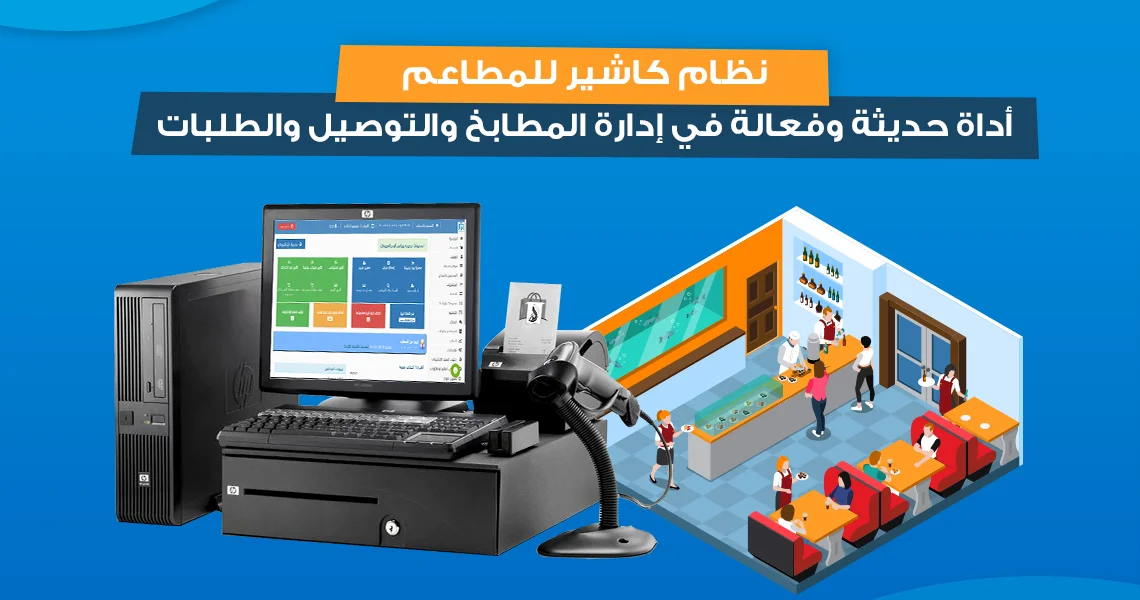
Cashier System
Fast food restaurants and fine dining establishments are among the busiest and most crowded places in the world today. With technological advancements, restaurants can improve their management and streamline their operations by using a restaurant POS system. These systems can help simplify daily restaurant operations, including kitchen management, delivery, and orders, leading to increased productivity and improved quality of service for customers.
Restaurant POS System
A restaurant POS (Point of Sale) system is a modern and efficient tool for managing kitchens, deliveries, and orders. It represents the latest advancements in the restaurant industry and has proven effective in improving sales processes, marketing efforts, and customer experience.
A restaurant POS system is an advanced combination of software and hardware that work together to simplify payment processing, order management, and inventory tracking.
In the past, restaurant management primarily relied on traditional methods such as using cash and paper invoices.
However, such methods were prone to errors, payment delays, and confusion in order tracking and inventory management. Thanks to restaurant POS systems, these challenges are overcome due to the advanced features they offer.
Restaurant POS systems provide numerous benefits to restaurant owners. They allow for quick and easy order entry, reliable inventory and sales tracking, and the generation of detailed reports on business performance. The system can also be used to manage menus, set prices, and organize delivery operations. This contributes to increased operational efficiency, improved customer experience, and ultimately leads to higher revenue and restaurant success.
The best cashier program tailored to your type of business.
Benefits of using a cashier system for restaurants in managing kitchens
The benefits of using a restaurant POS system in kitchen management are significant. A restaurant POS system offers numerous advantages that help streamline kitchen operations and achieve high efficiency.
One of the primary benefits of using a restaurant POS system is the organization and facilitation of kitchen operations. The system can effectively track inventory and manage orders, reducing human errors and improving the preparation and delivery process. With this system, you can save time, effort, and resources, while enhancing the customer experience.
A restaurant POS system provides detailed and comprehensive reports and statistics on kitchen performance. You can monitor sales, analyze data, and better understand customer behaviors and needs. This enables you to make the right strategic decisions to improve operations and increase profitability.
Furthermore, a restaurant POS system can help improve delivery processes and order management. The system can track, organize, and update the delivery status of orders instantly. This helps provide fast and efficient service to customers, increasing their satisfaction and boosting business growth.
The best cashier program for restaurants in Saudi Arabia.
The role of the cashier system for restaurants in facilitating the delivery process and managing orders
A restaurant POS (Point of Sale) system plays a significant role in streamlining the delivery process and managing orders efficiently.
This system helps improve the speed and accuracy of order taking and tracking, from the moment an order is placed until it is delivered to the customer.
With a restaurant POS system, the kitchen can receive orders quickly and effectively.
The system accurately records orders and sends them directly to the kitchen to start preparation.
This reduces the time spent manually entering orders and increases efficiency.
Additionally,
a restaurant POS system can track and update order status in real-time.
This means that delivery drivers can know where to deliver orders.
This facilitates coordination and communication between the kitchen and the delivery team.
The restaurant cashier system also helps in managing inventory and available products
Thanks to tracking sales and quantities sold, the system can alert the kitchen team when there is a need to replenish stock. This ensures that popular products never run out and customers’ needs are constantly met.
The importance of the cashier system for restaurants in analyzing data and creating important reports
A restaurant POS system is more than just a tool for recording orders and managing financial transactions; it also offers immense benefits in data analysis and generating valuable reports.
Data analysis is one of the cornerstones of success in today’s business world, and a restaurant POS system provides this capability in an exceptional manner.
By using a restaurant POS system, you can easily access a wide range of crucial data related to your business.
You can check the details of previous orders, identify the most popular dishes, determine peak and off-peak hours, manage your staff, and access a wealth of other information that can help you make strategic decisions. The data collected from restaurant POS systems provides valuable insights into your restaurant’s performance and guides you in the market.
With this data, you can identify customer consumption trends and preferences, improve your menu, and adjust prices accordingly. You can also analyze revenue and costs to identify areas where you can improve performance and increase profits. Thanks to restaurant POS system reports, you will be able to monitor your restaurant’s performance in terms of revenue, daily sales, inventory, costs, and profit margin.
The best sales program in ease of use.
Frequently Asked Questions About Restaurant POS Systems and Their Popular Answers
A restaurant POS (Point of Sale) system is a modern tool used to efficiently manage kitchens, deliveries, and orders in an organized manner.
As the use of this system becomes more widespread, many restaurant owners and operators have common questions. In this section, we will explore some frequently asked questions and their popular answers.
Q1: What exactly is a restaurant POS system? A: A restaurant POS system is a software program used to record orders, manage sales, and track inventory in restaurants. The system facilitates the payment process, organizes orders, and provides detailed reports on restaurant performance.
Q2: What are the benefits of using a restaurant POS system? A: A restaurant POS system offers numerous benefits, including:
- Easy and quick order recording, reducing errors and improving customer experience.
- Effective inventory management and tracking of sold and available products.
- Data analysis and generation of detailed reports on sales and financial performance.
- Offering multiple payment options, including cash and credit.
Q3: Does a restaurant POS system require complex installation? A: No, a restaurant POS system can be easily and quickly installed. It only requires installing the software on computers or devices Cashier System .
See questions about the cashier program
How to Choose the Best POS System for Your Restaurant?
When it comes to selecting a point-of-sale (POS) system for your restaurant, several factors should be considered to ensure optimal results and meet your business needs. Here are some essential tips for choosing the best POS system for your restaurant:
-
Compatibility and Integration: Verify that the system is compatible with other devices and software used in your restaurant, such as inventory management systems and electronic payment terminals. The system should seamlessly integrate with these systems to streamline operations.
-
Ease of Use: The system should be user-friendly and require minimal training for your staff. The user interface should have intuitive features and a well-organized layout to facilitate ordering and payment processes Cashier System .
-
Advanced Features: Check the features offered by the system, such as menu and order management, sales tracking, and analytical reports. The system should be customizable to suit your restaurant’s unique needs.
-
Technical Support: Ensure that a strong technical support team is available 24/7 to resolve any technical issues you may encounter. The system should have a good reputation for support quality and prompt response.