

Your business idea might be brilliant and your products top-tier, but lacking financial visibility is a fatal vulnerability. Statistics indicate that approximately 82% of business failures stem from cash flow issues and poor financial management, according to U.S. Bank data. Furthermore, human calculation errors account for 18.8% of retail inventory shrinkage.
What Is an Accounting System?
Simply put, an Accounting System is an integrated framework—typically a specialized software solution—designed to record, classify, summarize, and analyze a company’s financial transactions. It acts as the operational backbone supporting all managerial and financial decisions.
At its core, financial software logs daily ledger entries for every transaction. However, in modern enterprise resource planning (ERP), an Accounting System connects all departments: sales, procurement, warehousing, and finance. This structural integration turns raw operational metrics into valuable data, delivering unified visibility across all daily workflows.
Selecting an Accounting System eliminates operational friction caused by manual entry. Incorporating an automated System ensures real-time oversight of revenue streams, unlike disconnected record-keeping models.
The Importance of an Integrated Accounting System for Businesses
Relying on spreadsheets is no longer sufficient. Businesses of all sizes require an integrated financial administrative system for critical operational reasons:
- Ensures absolute financial accuracy and minimizes manual calculation errors.
- Delivers real-time financial visibility to corporate leadership at any moment.
- Accelerates strategic decision-making through precise metrics.
- Simplifies compliance with regulatory frameworks and e-invoicing standards.
- Reduces operational overhead by automating recurring ledger tasks.
- Tracks expenses and incoming revenues with total transparency.
- Grants immediate remote access to financial data from anywhere.
- Protects sensitive ledger records through secure data protection.
- Integrates seamlessly with sales channels, warehouse stock, and HR units.
- Supports long-term institutional stability and scalable commercial expansion.
Efficient Sales Management Using an Accounting System
Sales management serves as the lifeblood of any commercial enterprise. A modern Accounting System functions as a centralized command hub, ensuring every transaction executes with precision. Tracking real-time sales performance reveals your most profitable items and high-value clients, directly driving business growth.
Deploying a core Accounting System optimizes revenue tracking across retail branches. Implementing a scalable System empowers sales teams to manage customer pipelines efficiently.
Point of Sale (POS) Integration
An integrated Accounting System connects directly with point-of-sale (POS) terminals. This automatically records cash and credit sales transactions instantly, eliminating redundant manual data entries.
Precision Billing and E-Invoicing
The software generates compliant electronic invoices matching government tax standards. It monitors invoice statuses (paid, pending, overdue), reducing bad debts and maintaining accurate general ledgers.
Customer Relationship Management (CRM)
Connecting an Accounting System to customer profiles helps analyze purchasing patterns, enabling tailored promotional offers and stronger client relationships.
Linking the Accounting System with Inventory Management
The relationship between accounting protocols and inventory management is deeply linked. Warehouse inventory represents a massive portion of company assets; any stocktaking error directly impacts cash flow and profit margins.
An integrated software system ensures that issuing a sales invoice at the POS automatically deducts inventory counts, while entering purchase invoices updates warehouse stock instantly.
Automated inventory platforms trigger stock reorder alerts, preventing stockouts or capital lockup in overstock. Simultaneously, an Accounting System calculates Cost of Goods Sold (COGS) accurately using FIFO or weighted average methods, guaranteeing real-time financial reporting.
Integrating System prevents inventory shrinkage and stock discrepancies. Connecting an System to stock control modules delivers true unit-cost visibility.
Financial Reporting and Intelligent Analytics
The true strength of an Accounting System lies in transforming raw transaction metrics into actionable strategic insights. Modern software does not merely log entries; it analyzes operational patterns to deliver comprehensive financial reports:
- Generates instant income statements, balance sheets, and cash flow reports in seconds.
- Analyzes net profit margins per branch, department, or product line.
- Tracks individual sales representative performance and regional metrics.
- Highlights slow-moving inventory to optimize procurement spend and prevent dead stock.
- Delivers executive dashboards for complete operational visibility.
- Facilitates period-over-period financial comparisons to track growth trends.
- Features real-time visual analytics for immediate performance monitoring.
- Supports data-driven strategic planning over personal estimates.
- Reduces reliance on subjective management guesswork.
- Prepares the enterprise for confident, stable expansion.
An automated Accounting System simplifies multi-branch reporting. Relying on System guarantees clear ledger auditing during fiscal reviews.
Income Statements and Balance Sheets
Financial statements are generated instantly with a single click, saving hours spent on manual compilation.
Sales and Profit Analysis
Detailed breakdown reports track revenue by item, rep, or region, enabling sales managers to identify operational strengths and weaknesses.
Inventory Auditing and Movement Tracking
Clear visual readouts display current stock levels and stagnant items, informing smarter purchasing decisions through procurement software.
Data Security and Protecting Financial Records
Financial records are a company’s most valuable asset. Using a cloud-based Accounting System provides high-level cybersecurity against data loss, corruption, or unauthorized access. These platforms feature automated backup protocols and robust data encryption.
Conversely, relying on single local computers or unverified free software exposes your business to data corruption and operational downtime.
Adopting a cloud Accounting System safeguards sensitive commercial ledgers. A cloud-hosted Accounting System protects operational data through automated offsite backups.
Ease of Use and System Integration Capabilities
To avoid the friction of traditional legacy software, a modern System must remain user-friendly and intuitive. It should adapt naturally to daily workflows, making it ideal for small and medium-sized enterprises (SMEs) and retail shops without specialized accounting departments.
Furthermore, an integrated software suite must connect seamlessly with external tools like e-commerce storefronts, payment gateways, and government regulatory portals.
A flexible System bridges front-of-house sales with back-office ledgers. Modern Accounting System architectures streamline third-party API integrations.
The Role of an Integrated Accounting System in Ensuring Compliance with the Zakat, Tax and Customs Authority (ZATCA)
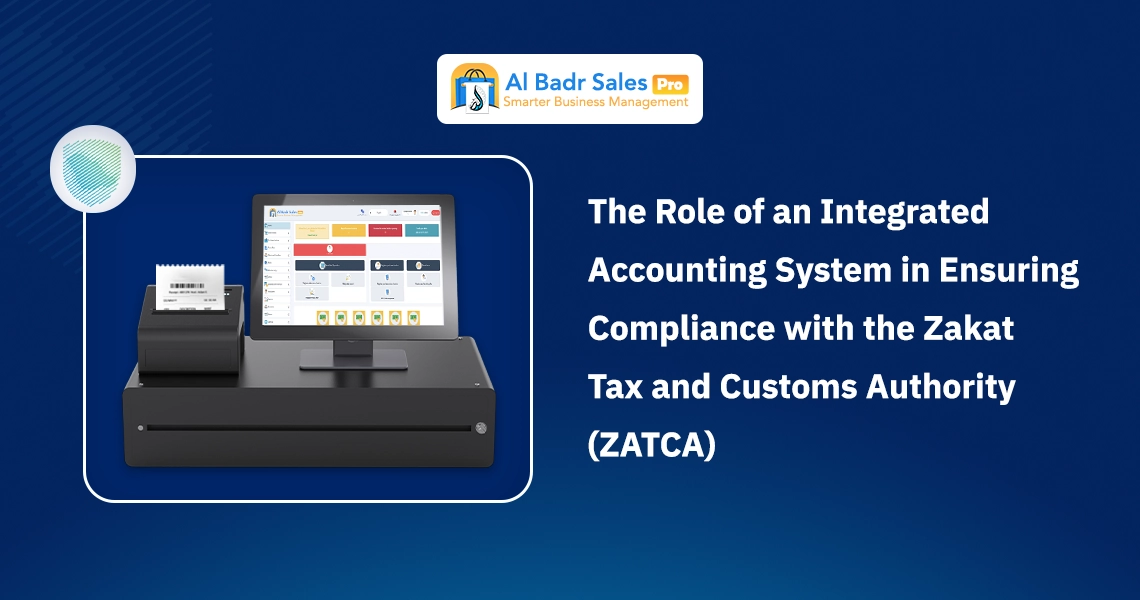
In the Kingdom of Saudi Arabia, adhering to Zakat, Tax and Customs Authority (ZATCA) regulations is mandatory. A modern Accounting System is engineered to maintain complete regulatory compliance through targeted features:
- Maintains full compliance with ZATCA phase one and phase two integration mandates.
- Issues technical electronic invoices matching official cryptographic standards.
- Calculates Value Added Tax (VAT) automatically on sales and purchases.
- Compiles automated tax returns for timely submission.
- Maintains structured audit trails for smooth official tax reviews.
- Eliminates human calculation errors on tax filings.
- Sends automated alerts for tax declaration deadlines and payment due dates.
- Tracks financial transactions back to source documents for full auditability.
- Receives continuous system updates matching local regulatory adjustments.
- Protects enterprises from compliance penalties through automated tax accuracy.
A compliant Accounting System automates complex VAT calculations. Utilizing a certified Accounting System prevents costly tax filing errors.
An Integrated Accounting System for Highly Efficient Sales and Inventory Control
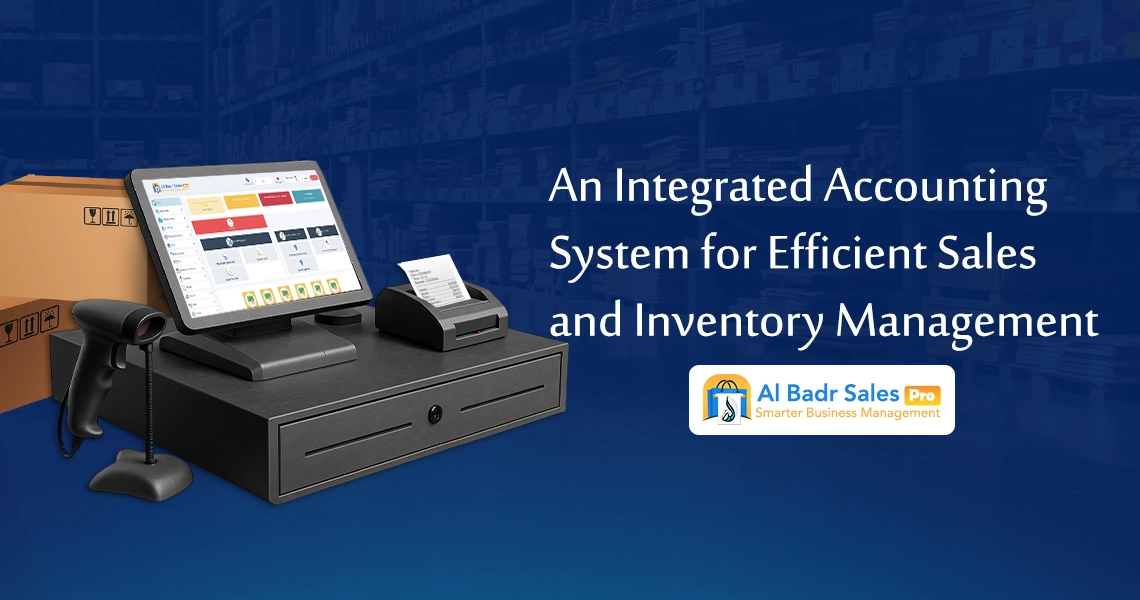
Managing business finances and sales volume extends far beyond recording basic invoices. As customer databases, inventory SKUs, and daily operations expand, adopting an integrated Accounting System becomes essential for maintaining organizational clarity.
Unifying accounting, sales, and warehouse controls allows business owners to manage operations from a single dashboard. This integration saves staff time, reduces human error, and provides executives with actionable data for better management decisions.
Implementing an Accounting System unifies multi-channel sales records. Managing business metrics through an Accounting System brings absolute financial control.
Managing Customers, Suppliers, and Outstanding Payables
Retailers and trading companies require continuous tracking of customer and vendor accounts, especially when managing credit sales or deferred payments. An integrated Accounting System connects client and vendor profiles directly to transaction histories.
When generating a sales invoice, the software logs payment terms, client details, and outstanding balances. This simplifies receivables collection and vendor payables management, replacing paper archives with digital records.
Maintaining vendor ledgers inside an Accounting System simplifies supply chain management. Tracking receivables through an Accounting System improves working capital control.
Real-Time Expense Management and Cash Flow Tracking
Financial management requires more than monitoring gross sales; tracking daily operational expenses and cash flow velocity is equally critical. High sales volume does not guarantee profitability if expenses remain unmanaged.
An integrated Accounting System logs operational expenses—such as rent, payroll, utilities, and procurement—linking them directly to core financial reports.
This real-time tracking provides business owners with clear visibility into available liquidity and upcoming liabilities, making procurement planning and financial forecasting far more accurate.
Monitoring operational overhead within an Accounting System preserves net profit margins. Real-time cash tracking via an Accounting System prevents cash flow bottlenecks.
The Role of an Accounting System in Supporting Executive Decisions
Sound management decisions depend on accurate data. Business owners need granular insights into top-selling products, operating expenses, net margins, and inventory turnover.
An Accounting System converts daily transactional data into clear executive reports. For instance, if analytics show a specific SKU generating high margins, procurement can scale up orders. Conversely, underperforming items can be discounted or phased out.
Using an Accounting System transforms raw numbers into executive strategy. A data-driven Accounting System optimizes capital allocation across departments.
Traditional vs. Cloud-Based Accounting Systems
Traditional software stores databases on local office machines, restricting system access to physical premises.
A cloud-based Accounting System provides secure online access based on user permission levels. This offers business owners real-time visibility across multiple store branches or remote locations.
Cloud solutions eliminate single-hardware dependency, offering scalable data sharing across leadership and operational units.
Deploying a cloud Accounting System enables remote multi-branch management. A web-based Accounting System ensures real-time operational sync across locations.
Selecting a complete platform like Al-Badr Sales Program unifies the entire business cycle—from initial sales invoices to inventory tracking, supplier ledgers, expense monitoring, and executive reporting.
How to Choose the Right Accounting System for Your Company
Selecting the right software requires evaluating key operational factors beyond simple pricing:
- Scalability: Can the software accommodate additional users, higher transaction volumes, and new branches without performance drops?
- Local Technical Support: Does the vendor provide responsive, localized customer support familiar with regional tax laws?
- Industry Features: Retail stores need fast POS interfaces; wholesale distributors require advanced inventory control and purchase order workflows.
- Cost vs. Value: Compare total cost of ownership—whether flexible cloud subscriptions or perpetual licenses—against feature capabilities and error reduction benefits.
Evaluating software options ensures your Accounting System matches enterprise growth. A flexible Accounting System adapts seamlessly to changing business demands.
FAQ About Integrated Accounting Systems
What is the difference between accounting software and an ERP system?
Standard financial software focuses primarily on basic ledgers, journal entries, and income statements. An ERP system like Al-Badr Sales Program is a fully integrated suite covering finance, POS sales, inventory control, HR, and supply chain operations within a single database.
Is a cloud accounting system secure for sensitive corporate data?
Yes, cloud platforms from reputable providers like Al-Badr utilize advanced data encryption, automated backups, and strict cybersecurity protocols, often providing higher security than vulnerable local office computers.
What key features should I look for in retail management software?
Retail management software should include an easy-to-use POS interface, real-time inventory deduction, compliant e-invoicing generation, and fast stock auditing tools.
The Best Accounting System Solution – Al-Badr Sales Program
When evaluating market-leading financial and retail management platforms, Al-Badr Sales Program stands out as an all-in-one solution. Designed to combine precise financial accounting with sales management and stock control, Al-Badr provides small and medium-sized enterprises with institutional-grade management capabilities without operational complexity.
Al-Badr directly addresses local market requirements by providing ZATCA-compliant e-invoicing, simplified stockauditing modules, and a fast POS system connected to general ledgers. Available as both a secure cloud-based platform and an on-premise installation, it gives leadership remote access to financial statements and real-time sales metrics. By unifying core business functions into a single system, Al-Badr Sales Program eliminates software fragmentation, letting you focus on scaling your enterprise.